
Asbestos Exposure Risks by Industry
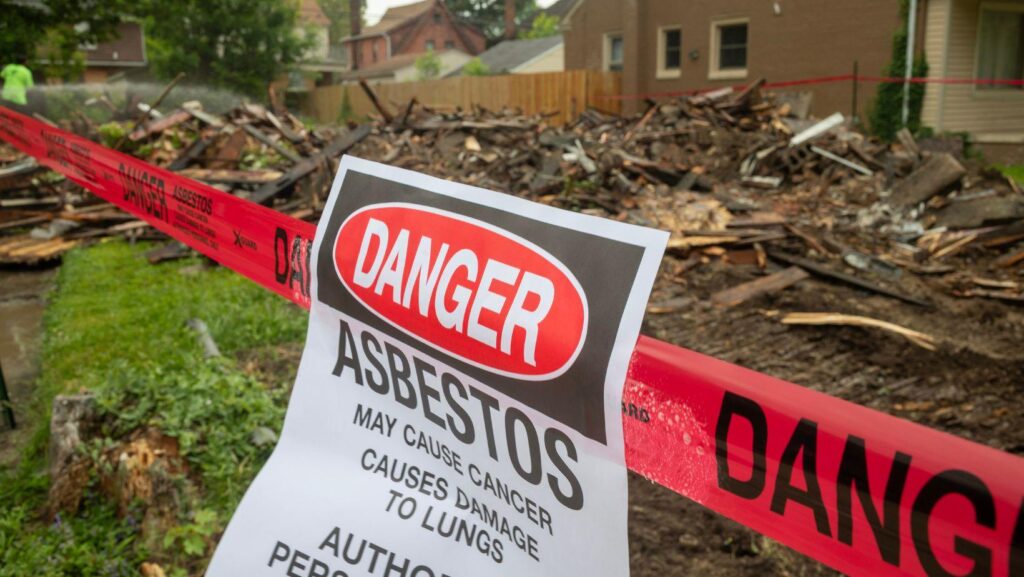
Asbestos is no longer used in brand-new construction materials here in the United States, but that doesn’t mean it just goes away like risk is gone. For decades it was applied across construction, manufacturing, shipbuilding, and a bunch of other areas, so asbestos-containing materials are still stuck in thousands of buildings, vessels, and industrial facilities that were made before the 1980s.
Persons who will eventually be working with these materials when doing repairs, renovations, or demolitions will continue to expose themselves to health hazards as well. Such health risks have been found to be connected to many different diseases. Some people develop mesothelioma, lung cancer, and asbestosis. What’s unfortunate is that these symptoms appear many years after their first exposure to asbestos, making it difficult to trace back where they acquired the disease.
The Centers for Disease Control and Prevention puts estimates at about 2,500 to 3,000 Americans being diagnosed with mesothelioma each year, with more than 2,200 deaths annually. In most cases, asbestos exposure is identified as the main cause.
Let’s take a deeper understanding of asbestos exposure risks by industry and the biggest workplace hazards to avoid any future high risks.
The Scale of the Problem: Why Exposure Decades Ago Still Matters
The number of people exposed to asbestos is said to be about 27 million in America within the timeframe between 1940 and 1979.
These effects can be seen even now, judging from CDC statistics, which indicate 54,905 people that died because of mesothelioma between 1999 and 2020. Since there is a latency period of 20 to 50 years for development of asbestos-related disease, these people would be only diagnosed now.
In addition, there are other avenues of exposure aside from work-related exposure. This occurs if workers carry asbestos particles with them at home through contaminated clothing.
For instance, one study conducted in Los Angeles County found out that between two percent and seven percent of children of shipyard workers developed asbestosis, while around 11% of wives had asbestos-induced lung diseases.
If you were exposed to asbestos and your employer knew or should have known of the dangers, you may have grounds for a premises liability lawsuit, according to North Carolina asbestos premises liability lawyer William M. Graham. And in support of this notion, property owners and employers are required to provide a safe workplace.
Shipbuilding: The Highest-Risk Industry
Ship construction and repairs are among the most dangerous professions when it comes to asbestos exposure. The mineral had been extensively used in marine applications as an insulator and fire retardant, especially after World War II.
In one 2024 study, about 92.2% of asbestos illnesses were related to shipbuilding, with mesothelioma making up for more than 15% of cases.
In 2025, an Oregon jury awarded $33 million to a retired shipyard employee with mesothelioma due to asbestos exposure at work.
Asbestos was often handled in areas with poor ventilation and even below decks, causing workers to be heavily exposed to the fibers. Many shipyard workers worked at federal installations. This fact means that they qualified for compensation through FECA instead of filing claims.
Other High-Risk Industries and Why the Risk Persists
A few industries have an elevated asbestos exposure risk sector by sector; it is not one straightforward story. For example.
- Construction and Demolition: Approximately 1.3 million workers employed in the U.S. construction and industry sectors remain at risk for asbestos exposure. Asbestos is common in flooring, wall and roof insulation, ceiling tiles, and piping found in old buildings. Those who work in demolition have high exposure risk levels, as asbestos fibers are released upon disturbance of materials during the demolition process.
- Power Generation: Power stations constructed in the past frequently incorporated asbestos within their structures. Maintenance workers and employees involved in repairs at older power plants can potentially come into contact with asbestos materials within the structures.
- Auto Repair: Asbestos material has been extensively used in brakes and clutch assembly until the end of the twentieth century. Exposure occurs when the mechanics clean or grind these parts of an older vehicle.
- Firefighting: Firefighters are vulnerable to asbestos fibers, which are released in smoke from fires involving old buildings. Mesothelioma incidence studies show a higher number of mesothelioma cases within the firefighting population.
- Military Service: Veterans, including members of the U.S. Navy are some of the most at-risk for mesothelioma. Military ships were widely fitted with asbestos products before 1980.
Current Regulatory Status and the 2024 Chrysotile Ban
In March 2024, the EPA finalized the prohibition on chrysotile asbestos, which was the sole type of asbestos remaining for commercial use in the US.
Although this is an important regulation to date, it will not remove asbestos already existing in old structures. Worker safety is still regulated according to the Occupational Safety and Health Administration (OSHA) regulations on asbestos, requiring exposure control, protective equipment, and training of employees.
As no exposure to asbestos can be considered totally safe according to OSHA, efforts will still be made to reduce exposure. Enforcement of the regulation continues as OSHA penalizes companies violating the regulations.
Legal Rights and What Workers Should Know
Workers who end up with mesothelioma, or some other illness tied to asbestos, due to occupational exposure at a job site might still have legal claims against the people who produced the asbestos-containing products used there, even if they also can file a workers’ compensation claim against their employer.
Product liability suits involving asbestos manufacturers have been argued for decades, and several asbestos trust funds, created via bankruptcy cases brought by previous manufacturers, can provide payouts to people who satisfy the eligibility rules.
Research from the RAND Corporation on asbestos litigation and those trust funds lays out the scale of it and how the whole system is arranged.
If someone has even a short history of industrial asbestos exposure and later develops breathing-related symptoms or receives a diagnosis that fits, they should first go over their job history with the treating physician and then consult an attorney experienced in asbestos claims to sort out what options might be available.
About The Author

 Almond Protein Powder: A Versatile Ingredient for Modern Food Innovation
  How Modern Research Standards Are Improving Laboratory Outcomes
  Spatial Gene Expression: Why Knowing Where Genes Are Active Matters as Much as
Knowing Which Ones
Spatial Gene Expression: Why Knowing Where Genes Are Active Matters as Much as
Knowing Which Ones  Unleashing Sound: A Detailed Examination of the Xbox Wireless Headset
  The Smart Patient’s Guide to Diagnostic Imaging: Ultrasound, X-Ray, and What to Expect
  Exploring the Holistic Approach of Traditional Chinese Medicine: An Insight into
Bojin Therapy
Exploring the Holistic Approach of Traditional Chinese Medicine: An Insight into
Bojin Therapy