
Survival Knife Selection for Travel: Field Checklist Essentials
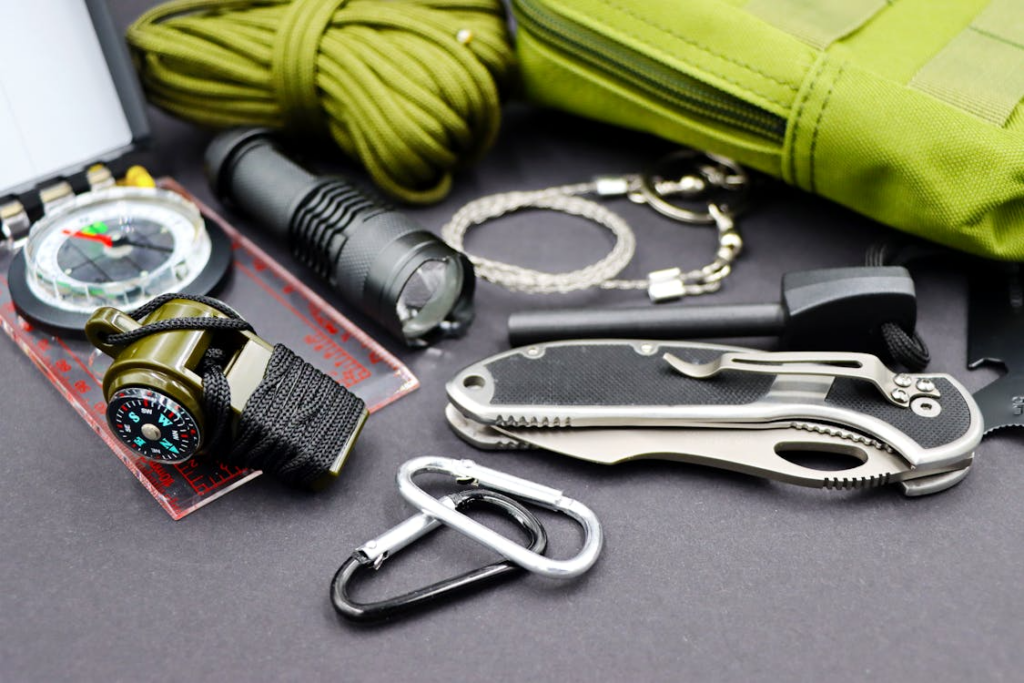
Choosing the proper survival knife to travel with is easily one of the most overlooked choices any outdoorsman will make.
Get it wrong and you end up with a blunt knife, lose your backpack, or break your tool when you need it most. Get it right and you own a tool that can tackle food processing, firewood, or emergency repair.
Outdoor travel is booming like never before. The Outdoor Industry Association reports that over 180 million Americans went outdoors for recreation in 2024 — the highest number of adventurers in history. This boom means more people entering the field are carrying blades. And making more mistakes than ever.
Here’s how to choose the right one…
What you’ll find inside:
- Why Survival Knife Selection Matters For Travel
- Field Checklist: What To Look For In A Survival Knife
- Travel Rules You Cannot Ignore
- The Best Type Of Survival Knife For Travel
Why Survival Knife Selection Matters For Travel
A survival knife is not just another knife you throw into your pack. It’s the one tool that must function whenever you need it.
When you travel, your blade must do the chopping for food, carving for shelter, sparking to start fires, and staying sharp for worst case scenarios. That means cutting cordage, batoning small pieces of wood, striking a ferro rod, and cutting a seatbelt should something happen.
A cheap knife breaks at the worst possible time. A quality survival knife, however, means the difference between fixing the problem and being the problem.
Traveling ups the ante. You don’t have access to a shop. Or a hardware store. You have what’s in your pack. Period.
They know this over at the survival knife industry — that’s why the worldwide survival knives market reached USD 2.5 billion in 2024 and is skyrocketing.
Field Checklist: What To Look For In A Survival Knife
If you’re considering purchasing a travel survival knife, check it against this list first. Fail to follow any one step, and you’ll wish you had when you’re 20 miles from civilization.
Fixed Blade vs Folding Blade
This is the first decision you have to make.
Fixed blade: Sturdier, more reliable, barely any moving parts to break. Hands down better for any real survival situation.
Folding blade: Smaller and easier to conceal. Perfect for daily carry, but not durable.
For travel, a fixed blade wins almost every time. Folders break.
Blade Length
There’s a sweet spot for travel survival knives:
- Under 4 inches: Too small for batoning wood or chopping
- 4 to 6 inches: The ideal range — versatile and packable
- Longer than 6 inches: Too large for detailed work, difficult to pack, and generally regarded with suspicion at borders.
Target 4-6 inches and you’ll hit nearly every job a traveller will encounter.
Steel Type
Steel is more important than most think. Inferior steel will rust after one humid season. Superior steel will stay sharp for years.
Either high-carbon steel (1095, etc.) or stainless steel of decent quality will work. High-carbon will hold an edge longer and is easier to sharpen when it dulls. However, it will corrode easily. Stainless is much more corrosion resistant, ideal if you travel often to humid or coastal areas.
Near waterways go stainless. In landlocked countries, high-carbon is tough to beat.
Full Tang Construction
Non-negotiable. FULL TANG!!!!!!!! What is full tang you ask? The blade steel extends the entire length of the handle. This is the way to go because it is stronger and will not break off like the little “rat-tail” tangs you find on cheaper knives. If it’s not full tang, leave it on the shelf.
Handle Material
Your grip needs to perform when wet, sweaty, or frosty. Search for Micarta, G10, or quality rubber. Stay away from cheap plastic – it will crack, slip, and fail you when you need it most.
Sheath Quality
Lots of people overlook the sheath. Having a crappy sheath is unsafe. A good sheath retains your knife well, allows for smooth one-handed deployment, and is weather resistant.
Kydex and good leather are the gold standards.
Travel Rules You Cannot Ignore
This is the biggest mistake travellers make. They choose an awesome knife… then they set it down at airport security.
The TSA doesn’t beat around the bush. Knives aren’t allowed on board unless they’re plastic butter knives with round blades. All fixed blades, folders, and pocket knives must be packed in checked luggage.
If you get caught and attempt to walk through security with a knife in your carry-on you’re in for a rude awakening. Fines can be in the thousands and you will lose your knife.
So here’s how to travel with a survival knife the right way:
- Always pack it in checked baggage — never carry-on
- Sheath the blade securely to protect baggage handlers
- Use a hard case if the knife is expensive or fragile
- Check destination knife laws before you arrive
Knife laws differ greatly from state to state, even country to country. Something legal where you are, may be illegal where you travel. Please research before traveling.
The Best Type Of Survival Knife For Travel
After all this… what’s the best type to actually buy?
With those things in mind, the solution for most travelers is a mid-sized fixed blade, full tang, 4 to 5 inch blade length, housed in a quality kydex sheath. It’s capable of handling 95% of the tasks you’ll need to perform while remaining compact in your pack.
Other considerations: look for a 90 degree spine if you plan on striking a ferro rod, a flat grind or saber grind if you plan on using your knife frequently for general tasks, and make sure the handle is comfortable in your hand.
Don’t break the bank on your first knife either. There are many quality knives in the $80-$200 range that will last you decades longer than cheap knives will. However, don’t buy cheap knives. That $20 knife you got at the gas station will fold on you when it’s your time to shine.
The survivalist market is growing the quickest in the outdoor knife industry. This means there are more to choose from now more than ever. Take your time, research them, and choose one that suits your actual travel style.
Final Thoughts
Picking a survival knife for travel comes down to a few simple things:
- Choose a fixed blade with full tang construction
- Aim for 4-6 inches of blade length
- Pick the right steel for your travel environment
- Don’t skimp on the handle or sheath
- Always pack it in checked luggage and follow TSA rules
A survival knife should be more than equipment. It should solve problems. A proper one will spend years in your pack. An improper one will spend minutes in a TSA bin.
Test each knife you’re interested in with this guide and choose the one that sticks.
About The Author

 Belize’s Clear, Lush Jungles: The Traveler’s Guide To Exploring And Protecting A Tropical Treasure In 2026
  HelpInUs.net Travel: How To Use Helpinus.net To Plan, Book, And Save In 2026
  Why Digital Detox Holidays Are Attracting More Travellers
  Culture & Travel Helpinus: How To Travel Smarter And Connect Deeper In 2026
  Time-Rich Travel: Why Modern Luxury Is No Longer About Showing Off
  Tahiti Tours Explained: Choosing Activities by Interests