
Healing First: Letting the Experts Handle the Legal Mess

The days immediately following a sudden tragedy are often described as a blur—a fog where time seems to stand still. You are expected to process the most profound loss of your life, yet the world outside refuses to pause. While you are trying to grieve, the phone rings. Bills arrive. Insurance adjusters ask questions that feel intrusive and cold.
It is a cruel paradox of modern life: the moment you are least equipped to handle administrative complexity is precisely when you are bombarded with it.
You are not alone in this experience. Unintentional injuries are a massive public health crisis and the 3rd leading cause of death in the United States. For thousands of families every year, the shock of a sudden loss is immediately compounded by a labyrinth of legal and financial demands. You are trying to mourn, but the “system”—insurance companies, hospitals, and legal deadlines—demands that you be sharp, aggressive, and organized.
The “Grief Brain” Is Real (And It’s Dangerous)
One of the most common feelings reported by survivors in the weeks following a tragedy is a sense of “fog” or an inability to complete simple tasks. You might find yourself staring at a single page of paperwork for an hour, unable to comprehend the words, or forgetting what you were saying in the middle of a sentence.
It is easy to blame yourself for this. You might feel weak or incapable. But science tells us that this reaction is not a weakness—it is a biological necessity.
This phenomenon is often called “Grief Brain.” Neuroscientific research has shown that grief triggers a massive stress response that affects the brain’s architecture. Specifically, studies suggest that traumatic grief can impair the prefrontal cortex, the area of the brain responsible for logic, planning, and emotional regulation.
When you are in deep mourning, your brain is rewiring itself to process the trauma. It prioritizes survival and emotional processing over executive functions like negotiation or strategic planning.
This creates a dangerous vulnerability. Insurance adjusters and corporate defense teams are trained to operate with cold logic. They know that you are not functioning at 100% capacity. If you attempt to negotiate with them while your brain is in this protective, fog-like state, you are bringing a biological disadvantage to a high-stakes table. You cannot effectively advocate for your family’s future when your biology is demanding that you rest.
The “Legal Mess” You Shouldn’t Have to Touch
When we talk about the “mess” left behind after a tragedy, we aren’t just talking about a lawsuit. We are talking about an avalanche of administrative tasks that require immediate attention.
Even without a legal battle, the to-do list is staggering. You may need to navigate probate courts to access bank accounts. For wrongful death, you have to obtain official police reports and autopsy results. You are likely managing a sudden influx of medical bills and funeral costs.
Then, there are the phone calls.
In the days after an accident, insurance companies often mobilize quickly. Their goal is to close the file as cheaply as possible. They may call you under the guise of “checking in” or offering a quick settlement to “help with expenses.” These interactions are traps. They are designed to catch you off guard, hoping you will say something that minimizes their liability or accept a sum that is a fraction of what your family will actually need in the coming years.
Many clients tell us, “The last thing I want to do right now is talk to a lawyer.” That sentiment is completely understandable. However, hiring an attorney is the only way to stop the noise. Once you retain counsel, you gain a shield. The constant calls from adjusters must stop. All correspondence goes through your attorney. We intercept the harassment so you don’t have to dread the ringing of the telephone.
The Cost of Waiting
A common reaction to this overwhelm is the desire to “press pause.” You might think, “I can’t deal with this right now. I’ll handle the legal stuff in six months when I feel better.”
While this is a natural emotional response, the legal system does not allow for it. The clock starts ticking the moment the incident occurs, and waiting can be catastrophic for your ability to find the truth.
The Investigation Gap
The most critical reason to act immediately has nothing to do with filing a lawsuit—it has to do with preserving the truth. Evidence is incredibly fragile.
In a car accident, skid marks fade or are washed away by rain. In a product liability case, the defective item might be discarded or “lost.” Surveillance footage from nearby businesses is often overwritten within 48 to 72 hours. Witness memories blur and fade.
Families often assume the police will handle this. However, there is a distinct difference between a police investigation and a civil investigation. Law enforcement is looking for crimes—drunk driving, assault, or clear statutory violations. If they don’t find a crime, they close the case.
They are not looking for civil liability, product defects, or subtle negligence that contributed to the death. They are not accident reconstruction experts working for you.
This is where the “Investigation Gap” widens. While you are paralyzed by grief, the negligent party (trucking companies, hospitals, or manufacturers) is often already on the scene, gathering evidence to defend themselves. You need someone on the ground immediately to level the playing field.

This is the primary reason to contact a wrongful death lawyer while the evidence is still obtainable. Their immediate priority is to freeze the scene, whether that means securing internal hospital staffing logs, downloading workplace safety sensor data, or preserving a defective product before it is “returned” to the manufacturer. By having a professional step in to lock down these details, you ensure that the facts are documented by an independent party instead of being left to a corporation’s internal damage-control team.
The Ticking Clock
Beyond the physical evidence, there is a strict legal deadline known as the Statute of Limitations. This is a law that sets the maximum time after an event within which legal proceedings may be initiated.
As defined by legal authorities, the Statute of Limitations is absolute. If you miss this deadline by even one day, you are forever barred from seeking justice, no matter how egregious the negligence was.
In some states and for certain types of claims, this window can be as short as one year. While that might sound like a long time, building a complex wrongful death case takes months. This is called the “discovery” phase. We need time to subpoena records, depose witnesses, and consult with experts to build a viable case.
If a family waits until two months before the deadline to contact an attorney, it is often too late to build a winning strategy. The “wait and see” approach is a risk your family cannot afford to take.
Conclusion
The decision to hire a lawyer after a tragedy is often fraught with guilt and hesitation. You want to focus on the memories of your loved one, not on contracts and courtrooms. But the reality is that the administrative “mess” exists whether you engage with it or not.
You deserve the space to grieve without the noise of legal administration. You deserve to turn off your phone knowing that a team of experts is fielding the calls, preserving the evidence, and fighting for your interests.
By handing over the reins, you ensure that the truth is uncovered and that justice is served. You are not starting a fight; you are finishing one so that you can finally focus on what matters most: healing.
About The Author

 How Online Marijuana Card Consultations Work in Reston
 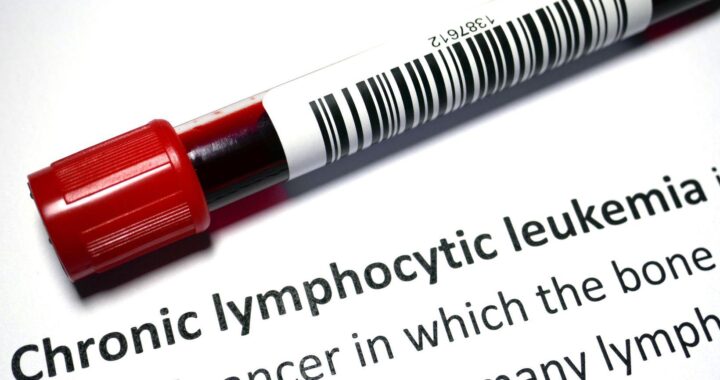 From Evidence to Practice: Integrating Alpine Zanubrutinib into CLL Treatment
Pathways
From Evidence to Practice: Integrating Alpine Zanubrutinib into CLL Treatment
Pathways  Why Beneficiary Planning Matters for Family Financial Security
  What Makes a Modern Online Casino Attractive to Players
  What Flavor and Texture Features Make CBD Gummies More Enjoyable?
  Are the Benefits of Coconut Water Overstated?